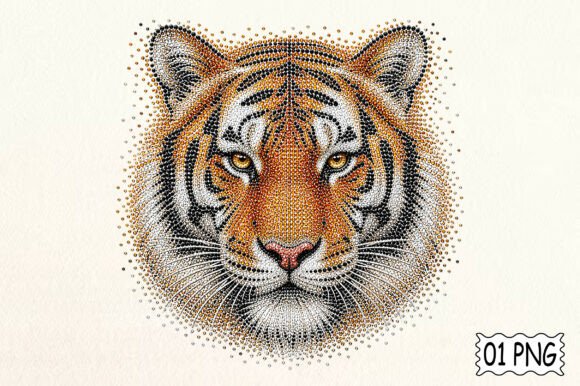
Faux Rhinestone Tiger Design: A Sparkling Asset for Bold Branding
In the crowded space of digital design, finding an asset that genuinely captures attention without feeling cheap or overdone is a challenge. The Faux Rhinestone Tiger Design offers a specific solution: it combines the raw power of wildlife imagery with a high-glamour, textured aesthetic. This is not just a clipart image of a tiger; it is a stylized piece of visual art that mimics the depth and sparkle of gemstones. For designers, marketers, and entrepreneurs, this type of premium font alternative serves as a focal point for branding, instantly communicating energy, luxury, and ferocity.
Visual Anatomy: More Than Just a Graphic
The core appeal of the Faux Rhinestone Tiger Design lies in its ability to simulate texture digitally. The artwork features a front-facing tiger, a pose that creates immediate connection and intensity with the viewer. However, the "faux rhinestone" effect is what elevates it from standard wildlife illustration to a design asset. The artist has used highlights and shadows to mimic the facets of cut crystals. The "gems" catch imaginary light, creating a sense of movement and luxury that a flat vector graphic simply cannot achieve.
When analyzing the visual hierarchy, the tiger’s eyes are the anchor. They are rendered with high contrast to ensure the subject feels alive, even amidst the heavy texture of the sparkling fur. The color palette relies on realistic orange and black tones, but the saturation is tuned to ensure the "bling" effect pops against both light and dark backgrounds. This makes it a versatile component for logo design or hero imagery on a website. It functions much like a display font—it is meant to be seen, not necessarily to carry long-form information, but to set the mood and tone instantly.
Strategic Applications for Modern Creators
Understanding where to deploy the Faux Rhinestone Tiger Design is key to maximizing its value. Because of its high-resolution quality and transparent background, it integrates seamlessly into various workflows. It is particularly effective in the realm of apparel design. Imagine this graphic on the back of a varsity jacket or centered on a heavyweight cotton t-shirt. The texture translates exceptionally well to sublimation printing, where the goal is often to create a tactile, 3D effect on fabric.
Beyond fashion, consider its role in packaging design. If you are launching a product line that needs to convey strength—perhaps a high-caffeine energy drink, a bold fragrance, or a streetwear drop—this tiger provides the necessary visual weight. It acts as a modern typography companion. Pair it with a clean sans serif font for the product details, and let the tiger dominate the shelf presence. The contrast between the organic, sparkling texture of the animal and the clean geometry of a sans-serif typeface creates a sophisticated tension that appeals to a mature, style-conscious audience.
Integrating Texture into Brand Identity
One of the most common mistakes in brand identity is relying solely on text and flat colors. Texture adds a layer of sensory experience to visual branding. The Faux Rhinestone Tiger Design introduces a tactile element that suggests quality and expense. When used in social media graphics, it stops the scroll. The human eye is naturally drawn to light and reflection; the rhinestone effect exploits this biological instinct to ensure your content gets noticed.
For editorial design, such as magazine covers or feature story headers, this image can serve as a powerful metaphor. It could represent a "rags to riches" story, the fierce competition of the business world, or the intersection of nature and luxury. It is a creative font in the sense that it speaks a visual language of its own. It tells a story of power and opulence without a single word of copy.
Practical Execution and Workflow Tips
When incorporating this design into your projects, treat it as you would a serif font or script font with high personality: use it sparingly and with intention. Because the image is dense with detail, placing it next to a handwritten font or a highly ornate script can create visual clutter. Instead, opt for stability. A bold, geometric sans serif font usually provides the best balance, allowing the tiger to remain the hero of the composition.
From a technical standpoint, the file is a high-resolution PNG. This means you have the flexibility to scale it for large format printing, such as banners or posters, without losing the crispness of the "gem" edges. For digital use, ensure that your compression settings are optimized so that the subtle shading in the rhinestone texture does not pixelate. This attention to detail maintains the premium font aesthetic you are trying to project.
Finally, think about color interaction. While the design works on a transparent background, placing it over a solid, deep color—like navy blue or charcoal grey—can make the gold and orange tones of the tiger sing. Conversely, placing it on a stark white background creates a high-fashion, editorial look. This adaptability makes the Faux Rhinestone Tiger Design a robust addition to any designer's toolkit, capable of elevating a project from standard to standout with a single element.